Can Startups Turn Classrooms into Virtual Wonderlands?
How AR and VR are transforming education in India
Introduction
Gaurav and Vijay Purbia, two B. Tech graduates, saw kids in a small town in Rajasthan’s Rajsamand area having trouble learning difficult ideas via textbooks and blackboards alone.
That’s when they attempted the unthinkable : they used a basic Google Cardboard device to take kids from their classroom to a 3D model of the solar system.
What began as a desire to make science interesting quickly grew into Altie Reality, a firm from Jaipur that is now leading India’s AR/VR education revolution.
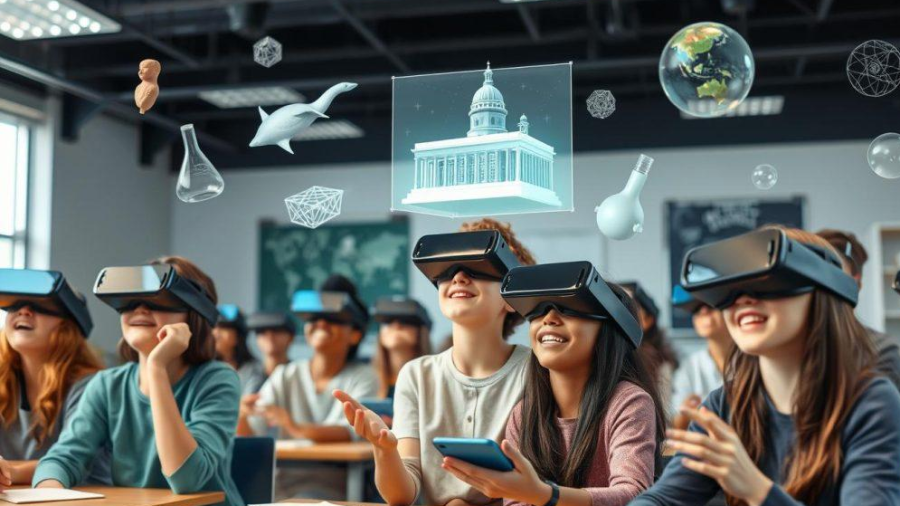
Their best software, LearnXR, lets K-12 students go on interactive school field excursions to the Taj Mahal, dissect the human body digitally, and even go through space, all from their smartphones.
But that’s not just the story of one startup. It’s a story about how 3D models, interactive learning, and the magic of extended reality are about to take over chalk and talk in Indian schools.
AR and VR are no longer just sci-fi fantasies. The government is supporting them, hardware prices are going down, and the digital ecosystem is growing. Its time is here, and its era is experiential learning in India.
What You’ll Learn from This Blog
- How wearable technology has evolved from step counters to holistic health companions.
- The growing demand for fitness, mental wellness, and preventive healthcare solutions in India.
- Key innovations and features driving adoption of wearables.
- The rise of Indian startups like Ultrahuman, boAt, and Sputnik Brain in this industry.
- Challenges the sector faces, from affordability to data privacy.
- How global trends are influencing the Indian wearable ecosystem.
- What the future of lifestyle and health could be with wearables fully integrated into everyday living.
Why EdTech Had to Change : From Boring Textbooks to
Living Lessons
Come on, copying equations off a blackboard is as boring as watching paint dry.
India has had an imbalanced number of teachers to students for a long time. There are too many students. Too few teachers.
That means that classes are too often just lectures that are boring, mechanical, and easy to forget. In a time when screens and swipes are everywhere, old ways of teaching are having a hard time keeping up with the best way for young minds to learn.
Step into Augmented Reality (AR), which adds digital information to the actual environment. There are now a lot of Indian and global edtech businesses, so learning has never been more engaging, interactive, and visual.
EdTech is more than simply a business; it’s a movement.
Who knew that algebra needed a makeover more than your photos on Instagram?
Startup Stories: Where Imagination and Innovation Meet
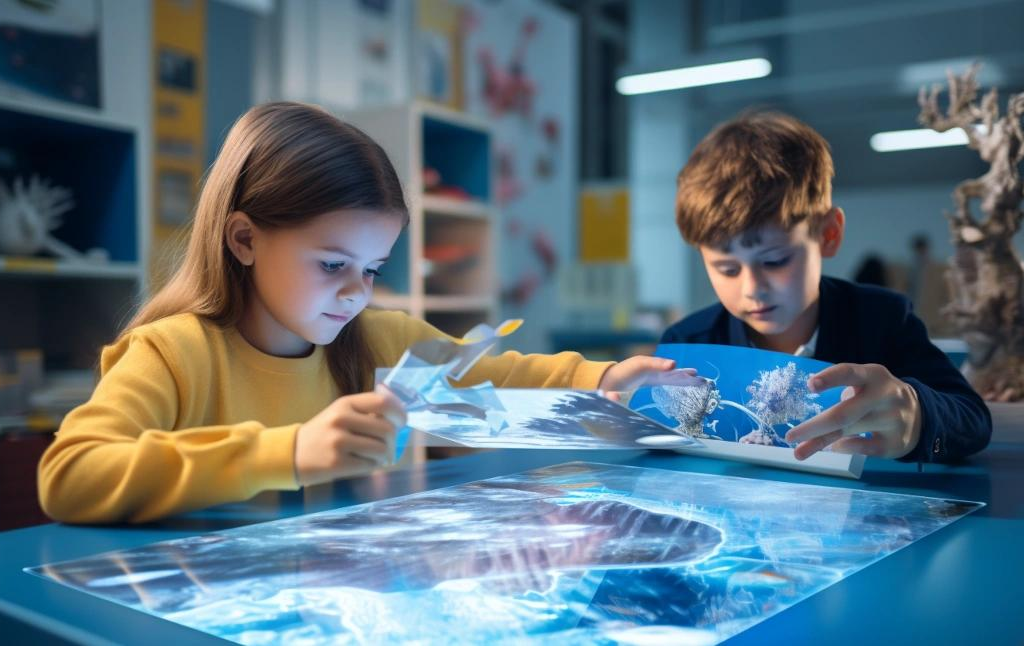
Let’s look at four of these kinds of startups that are helping India become the leader in the AR education revolution.
1. Veative Labs: Getting to the Heart of Science
Do you remember when studying biology meant looking at badly drawn figures on the blackboard? Those days are over, yes!
- Place : Central Delhi, India
- Founder : Ankur Aggarwal (2016)
Features :
- Walk through a plant cell or float inside a beating heart
- First XR Chip-powered VR headset (a personal time machine + research lab)
- 670+ VR modules (biology, physics, chemistry)
- Walk through the bloodstream
- Practice English in virtual conversations
- Create VR projects
- Real-time pronunciation feedback via voice recognition
Teachers can control student sessions, making learning more focused and personalised. Even special needs students can learn at their own pace in a calm, judgment-free environment.
Why do you need magic school buses when you have Veative headsets?
2. PlayShifu: Making Smart Use of Screen Time
Parents complain that their kids are glued to screens… But what if that “addiction to the screen” turned into an addiction to learning?
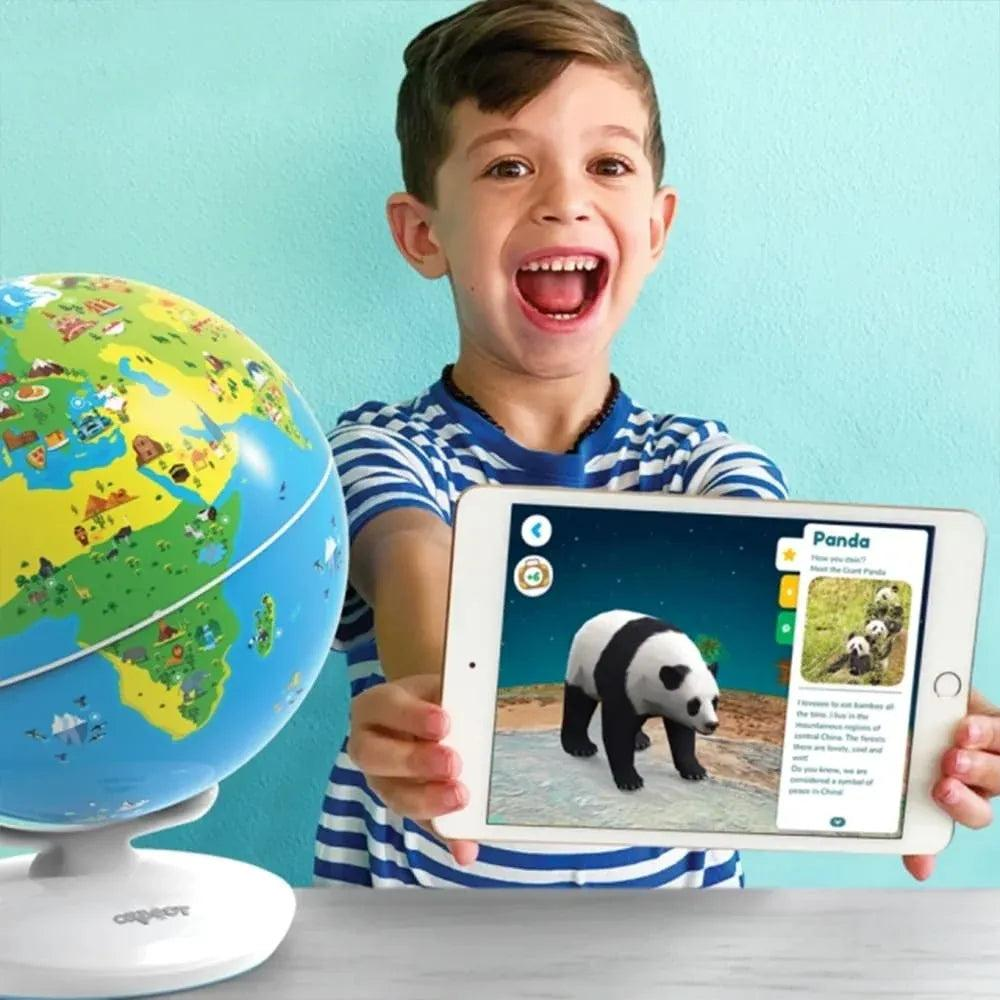
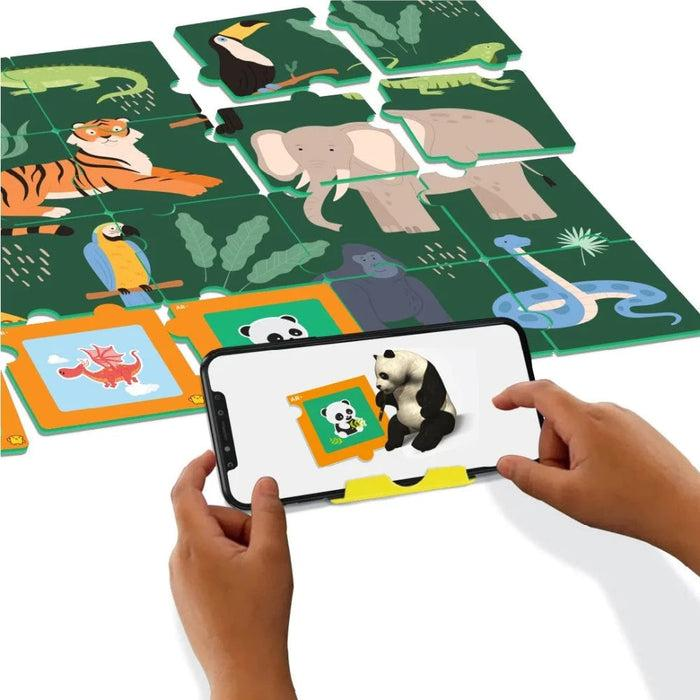
- Place : Bangalore, India
- Founder: Vivek Goyal and Dinesh Advani (2016)
Products :
- Orboot Earth, Dinos, Mars: scan globes to explore history, geography, and space
- Tacto Doctor: tablet becomes an interactive clinic
- Tacto Chess: strategy made fun
- Tacto Coding – learn logic through play
PlayShifu is used by 1M+ teachers and parents in 35 countries, proving that play and learning are best friends.
Who would have thought that coding and chess would compete with video games for attention?
3. TutAR: Giving Teachers a Magic Wand to Help Them
Teachers don’t need any extra chalk. What do they want?
A wand that makes holograms.
- Place : Thrissur, Kerala
- Founder : Infusory (2020)
TutAR lets teachers bring science lessons to life with AR via simple mobile apps.
- Show, scale, rotate, and annotate 3D models (muscles, potentiometers, etc.)
- Used in 100+ institutions across 19 states
- Vision: building the “Tutarverse”, an AR/VR environment for students & teachers to interact anywhere
If your physics teacher had a hologram, would they have been able to make thermodynamics fun?
4. zSpace: Touching the Future of Learning
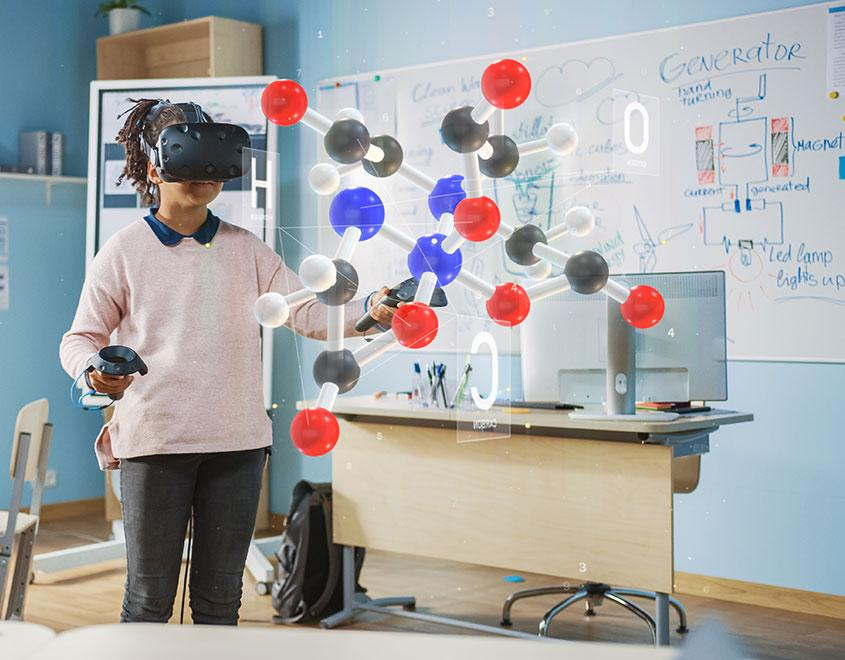
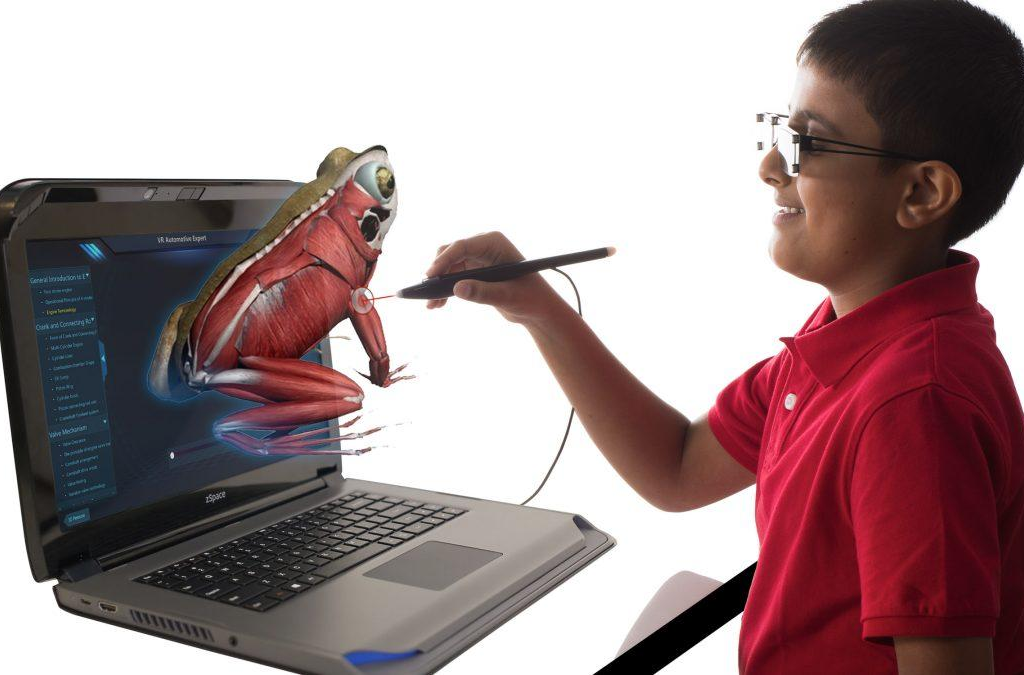
“Look, don’t touch” is no longer a thing. With zSpace, it’s all about “look AND touch.”
- Place : San Jose, California
- Founder : Paul Kellenberger (2007)
Features :
- AR/VR laptop with glasses + stylus
- Spin a DNA strand
- Dissect a frog virtually
- Look inside engines
zSpace serves learners from elementary to medical schools, with a strong focus on CTE (Career & Technical Education), ensuring job readiness.
Why just doodle in your notebook when you could cut up a frog in 3D?
There is a New Kind of Classroom
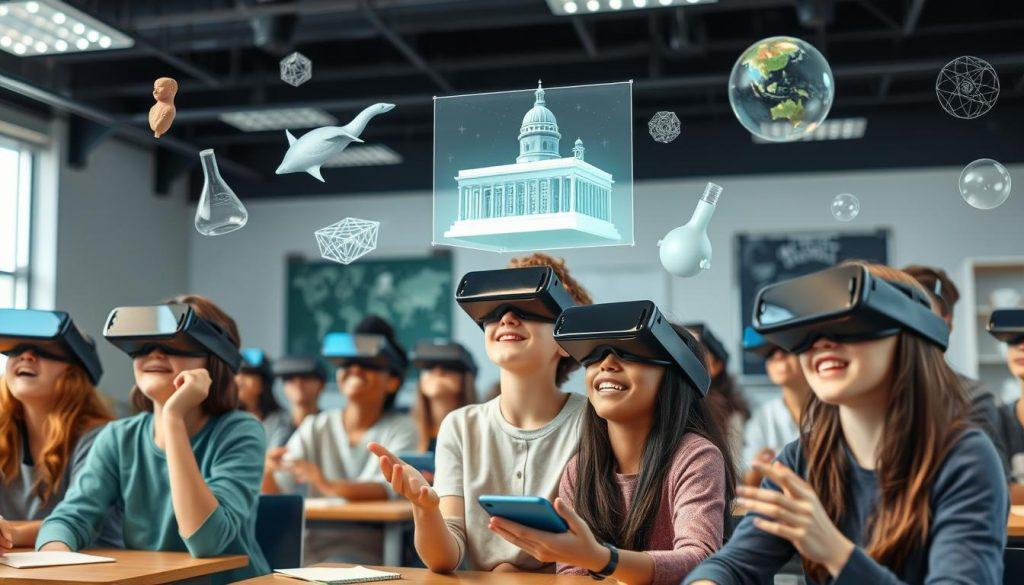
Textbooks, chalk, and projectors were once used.
Now : heartbeats, astronauts, and sharks in your classroom.
Thanks to Veative, PlayShifu, TutAR, and zSpace, students can :
- Talk to astronauts
- Explore a shark without cutting it open
- Step inside a beating heart
And this is just the beginning!
Are we transporting them to school or to a parallel universe?
The Strength and Difficulty of AR in School
Here’s the truth : AR isn’t just a cool trick.
It does what it says it will do. But it also costs money.
Why AR Works :
- Engagement : Keeps students interested and on task
- Visualisation : Turns abstract into concrete
- Accessibility : Lets distance & differently-abled learners learn at their pace
- Application : Connects theory with real-life uses
Challenges :
- Cost : Schools can’t provide AR tools to all students
- Training : Teachers need tech upskilling
- Inequality : Rural/ underprivileged students risk lagging behind
The AR education market is growing rapidly :
- $680.1B by 2027
- $24.7B metaverse education market by 2030 (43.76% CAGR)
Is AR the new chalk or just the coolest cheat sheet in the world?

Now it’s your turn to think
- What if your kid could go back in time to Egypt or learn math on Mars?
- What if the classroom of the future wasn’t limited to four walls, but instead spread across the universe?
AR is not just transforming how we learn, but also what we can do.
Stay inquisitive until we meet again.
What was something you always thought was boring, and how would AR make it fun for you?
With Indian startups entering the global stage, could the wearable industry become the country’s next big export story like IT and pharma once were?
Let us know what you think in the comments below!